
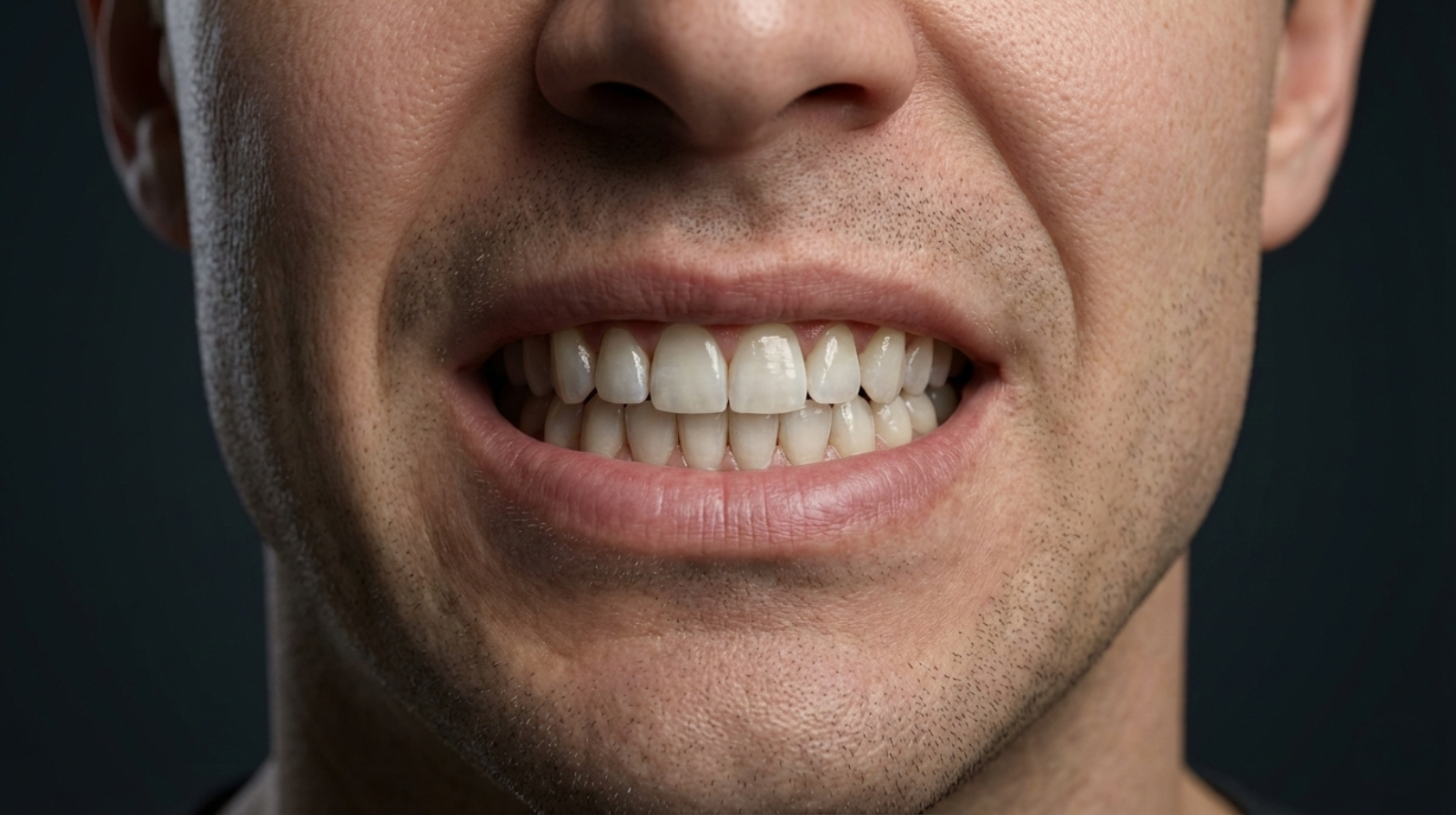
Countless people unconsciously grind and clench their teeth at unexpected moments, often without realising it’s happening. We’re talking about applying up to 250 pounds of pressure per square inch on your teeth, repeatedly. You could be doing it right now and maybe even while sleeping, completely unaware that your jaw is working harder than it does when you’re actually eating.
This habit is called bruxism. It affects roughly 1 in 5 people worldwide and is entirely involuntary. Most people only discover they’ve been grinding their teeth for years when their dentist points out the damage, often long before pain becomes impossible to ignore.
In this guide, we’ll explore everything you need to know about teeth grinding, why your body does it without permission, what it may be doing to your smile, and most importantly, how to take back control.
What Exactly Is Bruxism?
Teeth grinding, clinically known as bruxism, involves the repeated grinding of teeth or clenching of the jaw. While the physical action may look the same, bruxism actually occurs in two distinct forms
Awake bruxism happens during waking hours and is often linked to stress & anxiety. Many people clench their jaw without noticing while working, driving, or focusing on screens. Because it happens while you’re awake, it’s more common and slightly easier to become aware of once you know what to look for.
Sleep bruxism, on the other hand, occurs while you’re asleep and is completely involuntary. This makes it far more difficult to recognise and diagnose. You might not realise it’s happening at all, until it’s brought to your attention by a partner who’s been woken by the sound of grinding. By that stage, the habit may already have been placing significant strain on your teeth and jaw for years.
Why Do We Grind?
The causes of bruxism are more varied than you might think:
Stress and Anxiety
Stress is one of the leading triggers of bruxism, particularly sleep bruxism. Research suggests that up to 70% of cases are linked to stress. When we experience ongoing pressure, the body often holds onto tension without us realising it. This subconscious muscle tension can carry into sleep, causing the jaw to clench or grind. If you deal with high levels of stress in daily life, it may significantly increase your risk of bruxism.
Sleep Disorders
Conditions such as snoring and sleep apnoea are commonly seen alongside sleep bruxism. Many people who grind their teeth at night also struggle with disrupted breathing during sleep. While one doesn’t necessarily cause the other, they frequently occur together and can worsen overall sleep quality.
Medications
Certain medications, including some antidepressants and ADHD treatments, list teeth grinding as a possible side effect. If you’ve recently started a new medication and notice symptoms such as jaw tension or grinding, it’s worth discussing this with your GP or prescribing doctor.
Lifestyle Factors
Excessive caffeine intake, regular alcohol consumption, smoking, and recreational drug use can all increase the likelihood of teeth grinding. These substances can overstimulate the nervous system, making it harder for the jaw muscles to fully relax.
Bite Issues
Although less common than once believed, misaligned teeth or an abnormal bite may contribute to bruxism in some individuals by altering how the jaw rests and moves.
Genetics
Bruxism often runs in families. If your parents or close relatives grind their teeth, you may have a higher predisposition to developing the habit yourself.
Children and Bruxism
Bruxism in children is incredibly common, affecting around 15–40% of kids, and most children naturally outgrow it by their teenage years. Children’s teeth grinding often occurs during periods of growth, when baby teeth and adult teeth are coming in, or during times of stress such as starting school or dealing with family changes.
It can also be linked to conditions like mouth breathing or snoring, as well as common childhood habits such as thumb-sucking or prolonged pacifier use. Childhood bruxism usually doesn’t cause the same level of damage as adult bruxism, as baby teeth are temporary. However, if you notice your child experiencing jaw pain, headaches, or significant tooth wear, it’s worth having a chat with a dentist.
Health Risks Linked to Bruxism
If left unchecked, bruxism can have wider health impacts. Most directly, it can lead to significant implications, including:
- Temporomandibular Joint Disorders (TMD)
Ongoing teeth grinding can place excessive strain on the temporomandibular joints (TMJ), increasing the risk of TMJ disorders. This may result in chronic jaw pain, clicking or popping sounds, and difficulty fully opening or closing your mouth.
- Sleep Quality
Even if grinding doesn’t fully wake you, it can disrupt the natural sleep cycle. This fragmented sleep may leave you feeling tired and unrested, despite spending enough hours in bed. - Dental Work
If you’ve invested in veneers, crowns, or other dental restorations, bruxism can significantly shorten their lifespan. The repeated pressure can lead to cracks, loosening, or damage, increasing the likelihood of costly repairs or replacements.
Managing Bruxism
You can manage and reduce the effects of bruxism by considering these common solutions:
Protective Guards: Wearing a custom night guard while you sleep can act as a cushion for your jaw. This reduces the impact of clenching and protects your teeth from the cracks and chips often caused by bruxism
Improved Sleep Hygiene: Establishing a calming nighttime routine can reduce the physical tension that leads to grinding. This includes maintaining a consistent sleep schedule, limiting screen use before bed, and avoiding stimulants like caffeine or alcohol in the evening.
Stress Management
Managing stress is often one of the most important steps in reducing bruxism. Techniques such as mindfulness meditation, yoga, regular exercise, or speaking with a therapist can help relieve tension and address the underlying causes of teeth grinding.
Cognitive Behavioral Therapy (CBT)
For individuals whose bruxism is linked to stress or anxiety, CBT can be highly effective. This therapy helps identify and change the thought patterns and behaviours that contribute to grinding.
Physical Therapy
Targeted exercises and techniques for the jaw, neck, and head can help relieve muscle tension and reduce teeth grinding. This includes gentle stretches, jaw relaxation exercises, and massage to ease discomfort and improve overall jaw function.
Dental Solution
For teeth that have already been damaged by grinding, restorative options such as crowns, veneers, or bonding can help rebuild both the appearance and function of worn teeth. However, it’s essential to address the grinding behaviour first. Stabilising bruxism before restoring the teeth helps ensure these treatments last and prevents further damage.
Conclusion
Don’t let bruxism and jaw clenching impact your quality of life and sleep any longer. Our experienced team at Warwick Lodge Dental in Kent is ready to help you break free from these harmful habits and find lasting relief.
Whether you’re experiencing daytime clenching or nighttime grinding, our proven approach can help you return to pain-free days and restful nights. Contact us today to begin your journey toward healthier jaw habits and an improved quality of life right here in Kent.