
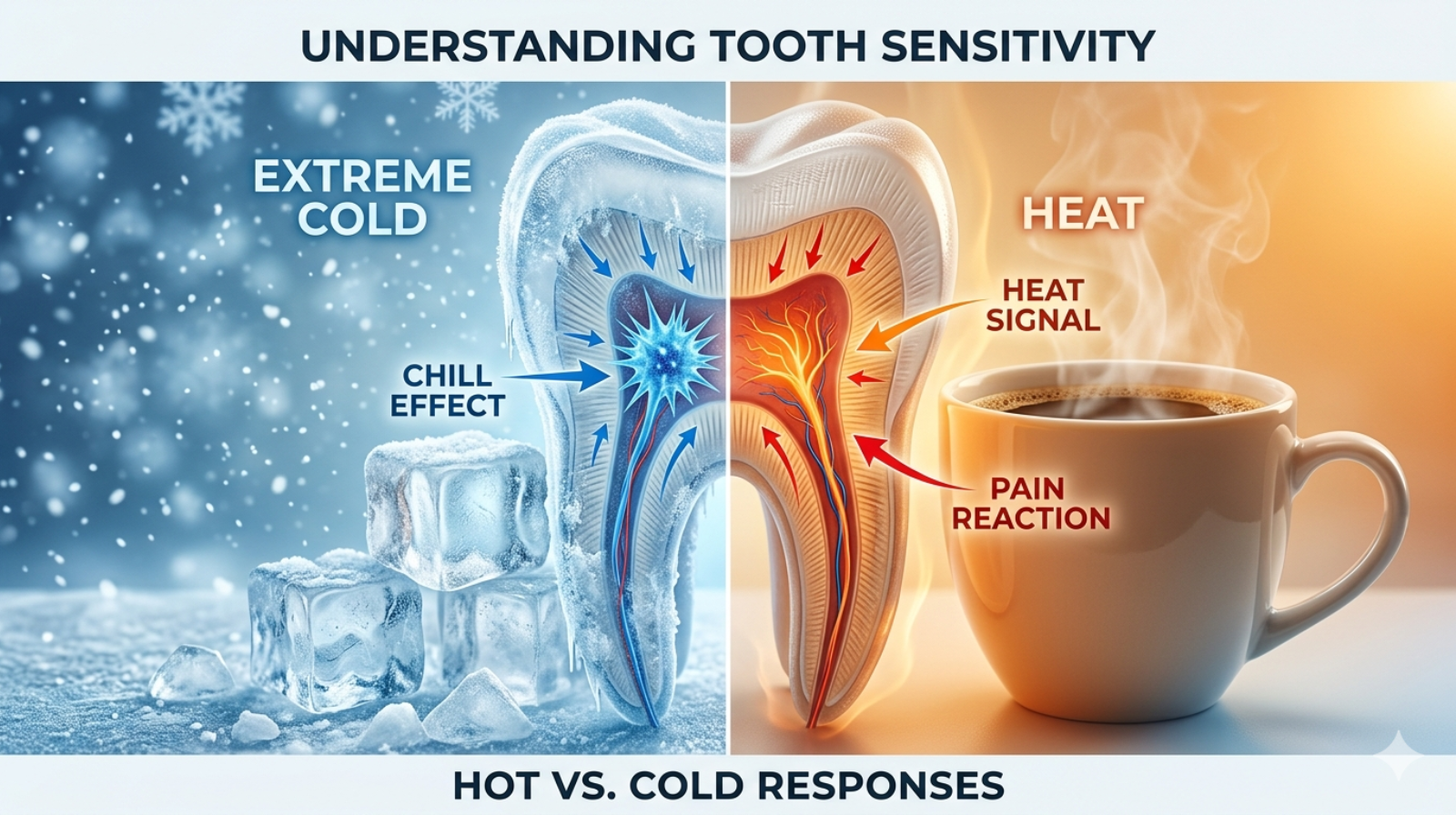
Tooth sensitivity, also known as dentin hypersensitivity, is a common dental problem characterised by a sharp, sudden jolt in one or more teeth when exposed to certain stimuli. Whether it is sipping on a hot beverage or biting into something cold, that uncomfortable sensation can feel like a sudden, unwelcome guest arriving without warning and refusing to leave.
At Warwick Lodge Dental, we are here to guide you through exactly why your teeth might be sensitive to hot or cold, and most importantly, what you can do about it.
First, Let’s Understand Your Tooth
Your teeth may look solid, but they’re actually made of different layers, each with a very specific job to do.
- Enamel: It is the outermost, ultra-hard layer. This protects your tooth from everyday wear, temperature changes and acids.
- Dentin: The softer layer sitting just beneath the enamel, filled with thousands of microscopic channels called dentinal tubules that connect directly to the tooth’s nerve.
- Pulp: It is the soft tissue located at the very centre of the tooth. As the innermost layer, it is packed with blood vessels and nerve endings, and is ultimately what registers pain when something goes wrong.
When your enamel is healthy and intact, it acts as a brilliant insulator, shielding your tooth from hot and cold without any problem. But when enamel thins, cracks, or your gums recede and expose the root, those tiny dentinal tubules become unobstructed pathways. Temperature, pressure and acids can now travel directly to the nerve and that is when you feel that sudden & sharp sting.
Common Causes for Teeth Sensitivity
There are several reasons why your teeth might react painfully to cold temperatures. Here are some of the most common reasons:
Aggressive Tooth Brushing
Brushing too hard or using a hard-bristled toothbrush can physically wear down the enamel, particularly at the gum line. Over time, this abrasion gradually erodes the protective enamel layer, exposes the sensitive root surface, and ultimately leaves your teeth vulnerable to sensitivity.
Gum Recession
Your gum line acts as a seal that protects the roots of your teeth. The root surface is covered in a much thinner material called cementum, which offers far less protection than enamel. When gums recede, those roots become exposed to the full force of temperature changes.
Gum recession is commonly can be caused by gum disease, teeth grinding, or simply ageing. If you notice your teeth looking ‘longer’ than they used to, that is a classic sign of recession worth mentioning at your next appointment.
Cavity
Bacteria in your mouth feed on sugar and produce acids that gradually wear down the tooth’s protective enamel. Over time, this can create a cavity that allows hot and cold temperatures to reach the nerve. Sensitivity while eating or drinking is often one of the earliest warning signs. Catching a cavity at this stage usually makes treatment simpler and more affordable.
Cracked Teeth, Old Fillings and Bruxism
Even a hairline crack in a tooth can be enough to let temperatures reach the nerve. Cracks can develop from biting on hard foods, from old dental work weakening over time, or from the relentless pressure of teeth grinding. Similarly, old or worn fillings may no longer be sealing the tooth effectively, and even a small gap can let cold air or liquid sneak through to the sensitive layers underneath.
Managing Sensitivity at Home
Many cases of tooth sensitivity can be eased with careful home care and lifestyle changes. Try these tips:
Desensitising toothpaste: Toothpastes formulated for sensitivity help block pain signals from the tooth surface and strengthen enamel. Use consistently for 4–6 weeks and try leaving a smear on sensitive areas overnight.
Soft-bristled toothbrush: Switch to a soft or extra-soft toothbrush and use gentle circular strokes. Hard-bristled brushes and aggressive scrubbing worsen enamel wear and irritate the gums over time.
Fluoride mouthwash: Used daily, a fluoride rinse helps remineralise and progressively strengthen the enamel, building your tooth’s natural defences over time.
Watch your diet: Cut back on highly acidic or sugary foods and drinks. If you do indulge in something acidic such as fizzy drinks or wine, rinse your mouth with water afterwards. Also, don’t brush immediately after acidic meals, the enamel is softer right then. Wait about an hour after eating before brushing
Night guard for grinders: If you grind your teeth at night, consider a custom mouthguard. Preventing further enamel wear at night can dramatically reduce sensitivity. (Discuss this with a dentist if grinding is a problem.)
Professional Treatment Options
If your sensitivity persists, a dentist can help by offering treatments tailored to your situation. Common professional options include:
- Fluoride treatments and protective sealants
In many cases fluoride varnish or gel is applied to sensitive areas to help strengthen the enamel and reduce discomfort. A bonding agent or protective coating may also be applied to exposed root surfaces, helping block the tiny channels in the tooth that transmit pain signals. Over time, these treatments can significantly reduce sensitivity. - Dental restorations
If sensitivity is caused by a cavity or a cracked tooth, restorative treatments such as fillings or crowns may be needed. These procedures repair the damaged area, remove decay, and restore the structure of the tooth. - Root canal therapy
When sensitivity is severe and linked to deep decay or inflammation of the tooth’s nerve, a root canal treatment may be recommended. During this procedure, the affected nerve tissue is removed and the inside of the tooth is carefully cleaned and sealed, eliminating pain and protecting the tooth from further damage. - Gum grafting
In cases where gum recession has exposed the roots of the teeth, a gum graft may be recommended. This procedure involves placing healthy gum tissue over the exposed area, providing additional protection and reducing sensitivity. - Addressing underlying issues
Sometimes tooth sensitivity can be linked to issues such as teeth grinding, bite misalignment, or excessive pressure on certain teeth. In these cases, treatments such as a custom night guard or orthodontic adjustments can help protect the enamel, reduce pressure on the teeth.
When Should You See Your Dentist?
You should see a dentist for sensitive teeth if:
- Sensitivity is new and has lasted more than a few days
- The pain is sharp, intense or stops you eating and drinking normally.
- You notice swelling, bleeding gums or visible changes to a tooth
- If you’ve tried sensitive toothpaste, gentle brushing and avoided triggers for a few weeks with little improvement
Ready to Say Goodbye to Sensitive Teeth?
Tooth sensitivity is common, but it’s not something that should be ignored. Whether the discomfort is mild or severe, identifying and treating the underlying cause is essential. With the right care, it’s possible to enjoy all the foods and drinks you love without the worry of sensitivity.
If tooth sensitivity is affecting your daily life, consider booking a consultation at Warwick Lodge Dental, one of the leading dental clinics in Kent, to identify the cause and explore the most suitable treatment options. Take the first step toward a healthier, pain-free smile today.