
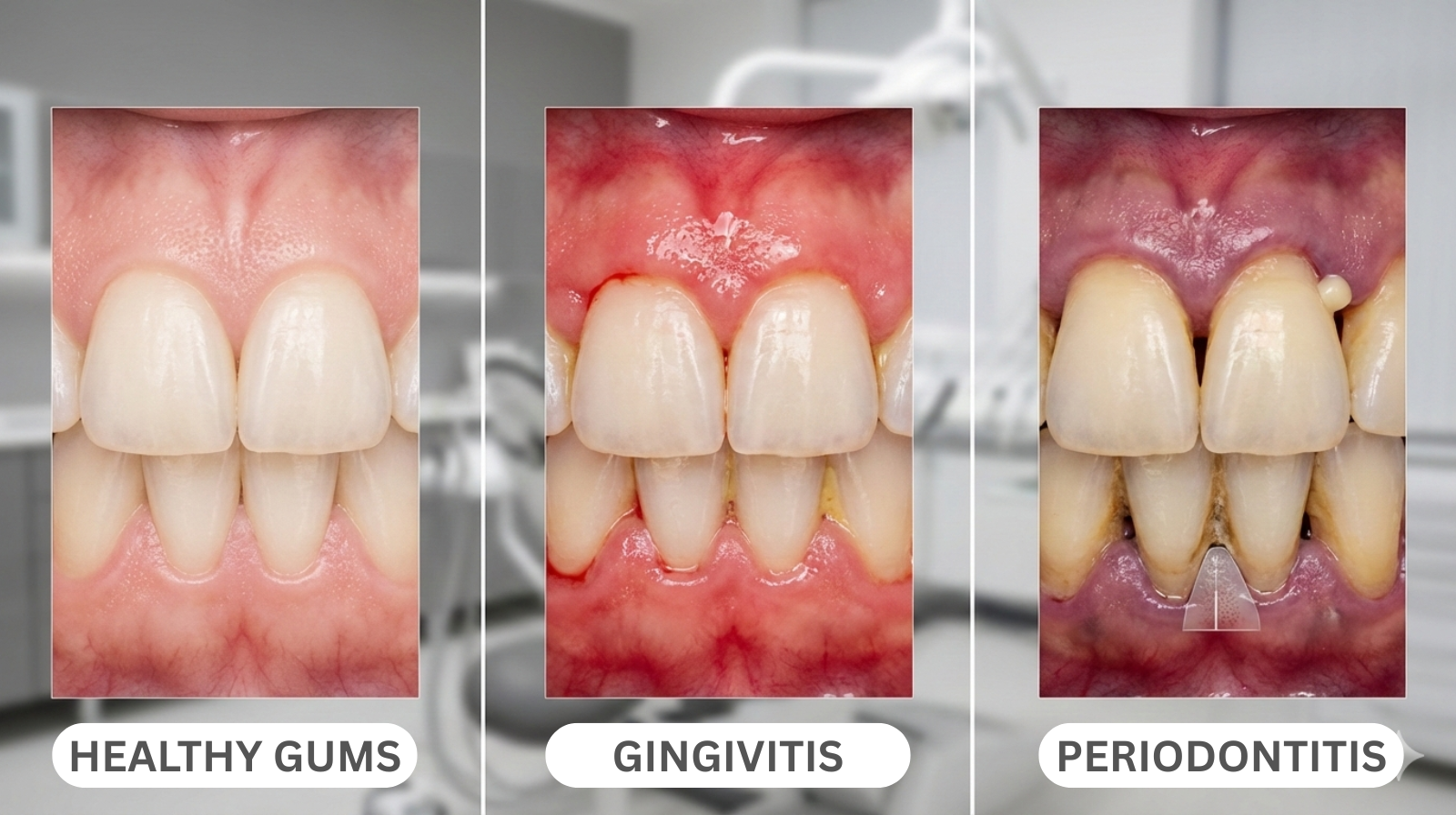
Have you noticed your gums bleeding when you brush your teeth? Perhaps they appear red, swollen, or feel tender to the touch? More than half of adults in the UK experience some form of gum disease, making it one of the most common oral health concerns today.
What many people don’t realise is that gum disease can develop in several forms and recognising the difference is essential for protecting your oral health. Rather than being a single condition, gum disease exists on a spectrum, progressing from mild inflammation to a more serious and potentially damaging stage. Understanding these distinctions is key to determining which dental treatment may be most suitable for you.
Gingivitis
Gingivitis is the initial stage of gum disease and affects up to 90% of the population at some point in their lives. It is characterised by inflammation of the gum tissue, primarily caused by the buildup of bacterial plaque on the teeth. If this plaque is not properly removed, it can irritate the gums and lead to swelling, redness, and bleeding. With consistent oral hygiene practices, gingivitis can be completely resolved. The gums can return to their healthy, pink state, and the inflammation can be eliminated before any permanent damage occurs.
Signs and Symptoms of Gingivitis
Common indicators of gingivitis include:
- Red or swollen gums – Healthy gums should appear pink and firm, whereas inflamed gums often look darker red or even purple in colour.
- Bleeding gums – Especially noticeable during brushing or flossing
- Tender or sensitive gums – Gums may feel sore to the touch
- Bad breath – Persistent unpleasant odor that doesn’t improve with regular brushing
- Shiny gum appearance – The gum surface may look glossy due to swelling
Periodontitis
Periodontitis develops when gingivitis is left untreated, allowing bacteria to penetrate deeper below the gum line. As the gums pull away from the teeth, pockets form between the teeth and gums. This progression marks the transition from a reversible condition to one that causes permanent damage. These pockets create an ideal environment for bacteria to thrive, as they cannot be reached with regular brushing or flossing. The deeper these pockets become, the more difficult it is to control the infection.
Signs and Symptoms of Periodontitis
Periodontitis presents more serious symptoms than gingivitis:
- Receding gums – Teeth may appear longer as gums pull away, exposing tooth roots
- Deep periodontal pockets – Spaces measuring 4mm or deeper between teeth and gums
- Pus between teeth and gums – Indicating active infection
- Painful chewing – Discomfort when biting or eating
- Changes in bite – The way upper and lower teeth fit together may change
- Sensitive teeth – Particularly sensitivity to temperature due to exposed roots
Stages of Gum Disease
Understanding how gum disease progresses helps you catch it while it’s still reversible. Here is the breakdown of the four stages:
Stage 1: Gingivitis
Gingivitis is the earliest and mildest form of gum disease. The primary cause is the buildup of bacterial plaque on the teeth due to infrequent or poor brushing. Gums may appear red and swollen, although the condition is often painless and therefore is often easily overlooked. With early intervention, gingivitis is completely reversible. Professional cleaning, improved brushing, and daily flossing can restore gum health and prevent the disease from progressing to more serious stages.
Stage 2: Early Periodontitis
If gingivitis is left untreated, it can progress to early periodontitis. At this stage, the infection begins to affect the supporting bone around the teeth, and small periodontal pockets may form between the gums and the tooth surface. As early bone loss occurs, the gums may start to recede slightly. Brushing and flossing alone are no longer sufficient to remove plaque and hardened tartar from beneath the gum line. Professional treatment, such as scaling and root planing, is required to thoroughly clean below the gum line and smooth the root surfaces.
Stage 3: Moderate Periodontitis
As the disease progresses, periodontal pockets deepen and greater bone loss occurs. Gum recession becomes more visible, teeth may feel loose, and sensitivity can increase. In some cases, a white or yellow discharge from the gum line may indicate infection. At this stage, bacteria may enter the bloodstream and potentially affect overall health. Treatment typically involves more intensive deep cleaning, possible local antibiotics, and more frequent maintenance visits to help stabilise the condition.
Stage 4: Advanced Periodontitis
As periodontal disease reaches its most severe stage, teeth may become noticeably loose, and chewing can become uncomfortable or even painful. You may also notice changes in how your teeth fit together when you bite. At this advanced stage of periodontal disease, the risk of tooth loss significantly increases. More complex periodontal surgery may be necessary to manage the infection, preserve remaining teeth, and restore function.
Prevention Tips for Avoiding Gum Disease
Preventing gum disease is far easier and far less costly than treating advanced periodontal disease. By following these simple steps, you can significantly reduce your risk of developing gingivitis and help prevent it from progressing to periodontitis:
1. Brush Properly Twice a Day
Brush your teeth twice daily using fluoride toothpaste. Hold your toothbrush at a 45-degree angle toward the gum line and use gentle circular motions to effectively remove plaque without damaging the gums.
2. Floss Every Day
Daily flossing removes plaque and food particles from areas your toothbrush cannot reach, particularly between teeth and just below the gum line.
3. Attend Regular Dental Check-ups
Visit your dentist at least twice a year for professional cleanings and examinations. If you have existing gum disease, more frequent visits (every 3–4 months) may be necessary to maintain stability.
4. Quit Smoking or Tobacco Use
Smoking significantly increases the risk of gum disease and slows healing. Your dentist can provide guidance and support to help you stop.
5. Maintain a Balanced Diet
A diet rich in essential vitamins and minerals, particularly vitamin C, supports strong gums and overall oral health.
6. Stay Hydrated
Drinking enough water supports healthy saliva production, which naturally helps wash away bacteria and protect your teeth and gums.
Concerned About Your Gum Health?
If you think you may have gingivitis or periodontitis, or need to schedule a cleaning, Warwick Lodge Dental is here to help. We are proud to serve the residents of Kent and surrounding areas. Call us today at 01227 375 592 to speak with our friendly team. Check out our blogs for additional dental tips and advice.