
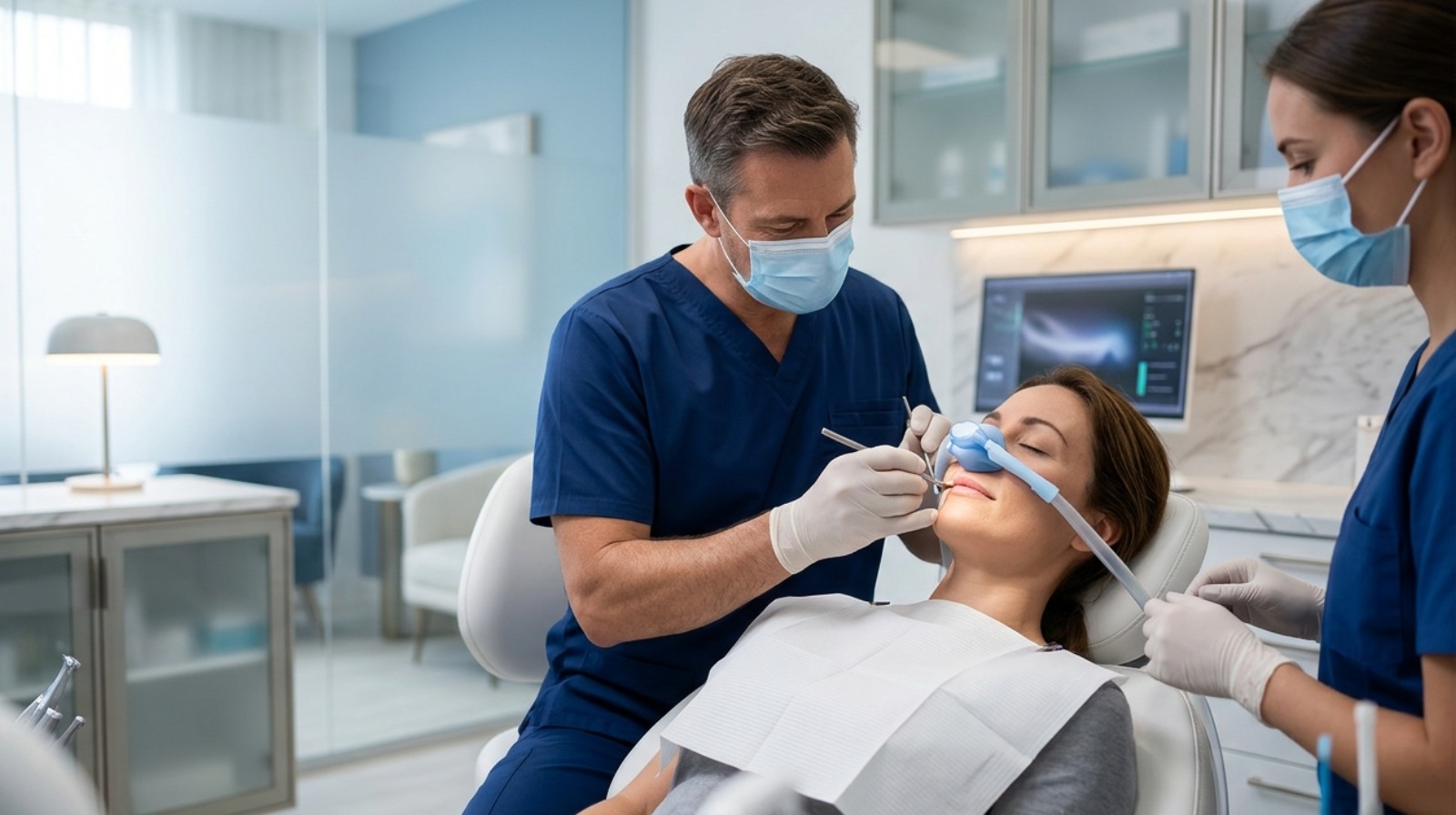
Dental anxiety is a common phenomenon that many people experience even at the mere thought of visiting a dentist. This could be the very reason some of you have been avoiding your dental appointments. To help you overcome these dental fears, dentists use different types of sedatives to keep you calm and relaxed, allowing them to perform the necessary dental procedures with ease. So, if dental anxiety has been holding you back, sedation dentistry might just be the solution you have been looking for. Read on to learn more about the different types of sedation used in dental procedures
What Is Dental Sedation?
Dental sedation refers to the use of medication to help patients relax during dental treatment. The sedative makes the patient drowsy and is administered before or during a dental procedure to keep the patient calm and comfortable, especially during long or complex treatments.
Sedation is suitable for a wide range of patients, including those who experience:
- Dental anxiety or phobia
- A strong gag reflex
- Difficulty sitting still for long periods
- High sensitivity or a low pain threshold
- The need for a lengthy or complex procedure
- Previous traumatic dental experiences
If any of this sounds like you, sedation dentistry could make a real difference to your dental experience.
Main Types of Dental Sedation
1. Nitrous Oxide (Laughing Gas)
Nitrous oxide is the gentlest form of dental sedation. It is delivered through a small mask placed over your nose, where a carefully mixed combination of nitrous oxide and oxygen is inhaled and quickly absorbed by the body. Within minutes, you will begin to feel pleasantly relaxed and at ease.
Nitrous oxide wears off quickly, meaning you can safely drive yourself home right after your appointment. It is a form of conscious sedation, which means you remain awake and aware throughout the procedure. This makes it an ideal choice for people with mild to moderate dental anxiety, and it is safe for use on both children and adults.
Nitrous oxide is commonly used for a variety of routine dental procedures, including:
- Dental cleanings
- Cavity fillings
- Tooth bonding
- Crown or bridge preparation
2. Oral Sedation
Oral sedation is a good option for people who find the idea of an IV needle concerning or who do not respond sufficiently to nitrous oxide. It is taken in the form of a tablet, one to two hours before your appointment, as it can take some time for the medication to take full effect.
While you will still be awake and conscious during the procedure, oral sedation has a stronger effect than nitrous oxide and offers a deeper level of relaxation. Its convenience and ease of administration make it a suitable option for a wide range of patients.
However, there are a few important things to keep in mind. You will need a trusted adult to accompany you to and from your appointment, and you should avoid driving or operating any machinery for 24 hours after taking the medication.
3. Intravenous (IV) Sedation
IV sedation is the deepest level of sedation used in general dental practice. The medication is delivered directly into your bloodstream through a small needle, which means it works very quickly and takes effect almost immediately. It produces a state of conscious sedation, causing patients to feel deeply drowsy or even fall asleep during their procedure.
IV sedation is a safe and effective option for patients who are undergoing more complex or lengthy procedures, such as tooth extractions or dental implant placements. It is administered carefully by highly trained healthcare professionals who have undergone extensive, specialized training, ensuring that the level of sedation can be precisely monitored and adjusted throughout the procedure to keep you comfortable and safe.
4. General Anesthesia
General anesthesia is the strongest and most profound form of sedation used in dentistry. It is a fast-acting sedative, and once administered puts the patient into a deep sleep, making them completely unconscious and unaware during the procedure.
While medication can be given to reverse the effects of general anesthesia, it still takes time for patients to fully wake up and regain awareness. Recovery is more intensive compared to other forms of sedation, and patients typically spend several hours in a recovery room under careful observation before being cleared to go home. You will also likely experience a lingering “hangover” effect, such as drowsiness, mild nausea, or grogginess, for up to 24 to 48 hours following the procedure.
Due to its intensity, general anesthesia is usually reserved for patients undergoing extensive oral surgeries, those with severe dental phobia, patients with special medical needs, or young children who are unable to cooperate during treatment. It is always administered and monitored by a qualified anesthesiologist or a specially trained dental professional to ensure your safety throughout the procedure.
Is Dental Sedation Safe?
Yes, when administered by trained dental professionals in a properly equipped clinical environment, dental sedation is very safe. At Warwick Lodge Dental, your safety is our priority.
Before any sedation is recommended, we carry out a thorough medical and health review. This allows us to identify any contraindications and tailor the approach specifically to you. During your procedure, your vital signs are carefully monitored, and our whole team is trained in sedation protocols and emergency procedures.
We always follow the guidelines set by the General Dental Council (GDC) and adhere to the highest clinical standards, so you can feel confident you are in safe hands from the moment you walk through our door.
Frequently Asked Questions About Dental Sedation
Will I be completely unconscious?
No. With inhalation, oral, and IV sedation, you remain conscious and able to respond to your dentist throughout. You may feel very drowsy or have limited memory of the procedure, but you are not put fully to sleep as you would be with a general anaesthetic.
Will I feel any pain?
Sedation reduces anxiety and increases your pain threshold, but it is not a painkiller on its own. It is always used alongside a local anaesthetic, which numbs the area being treated. Most patients feel nothing at all during their procedure.
How do I know if I’m a good candidate for sedation?
The best way to find out is to book a consultation with us. We’ll review your medical history, discuss your concerns, and recommend the most appropriate option. You can also visit our nervous patients page to find out more about how we support anxious patients at every step.