
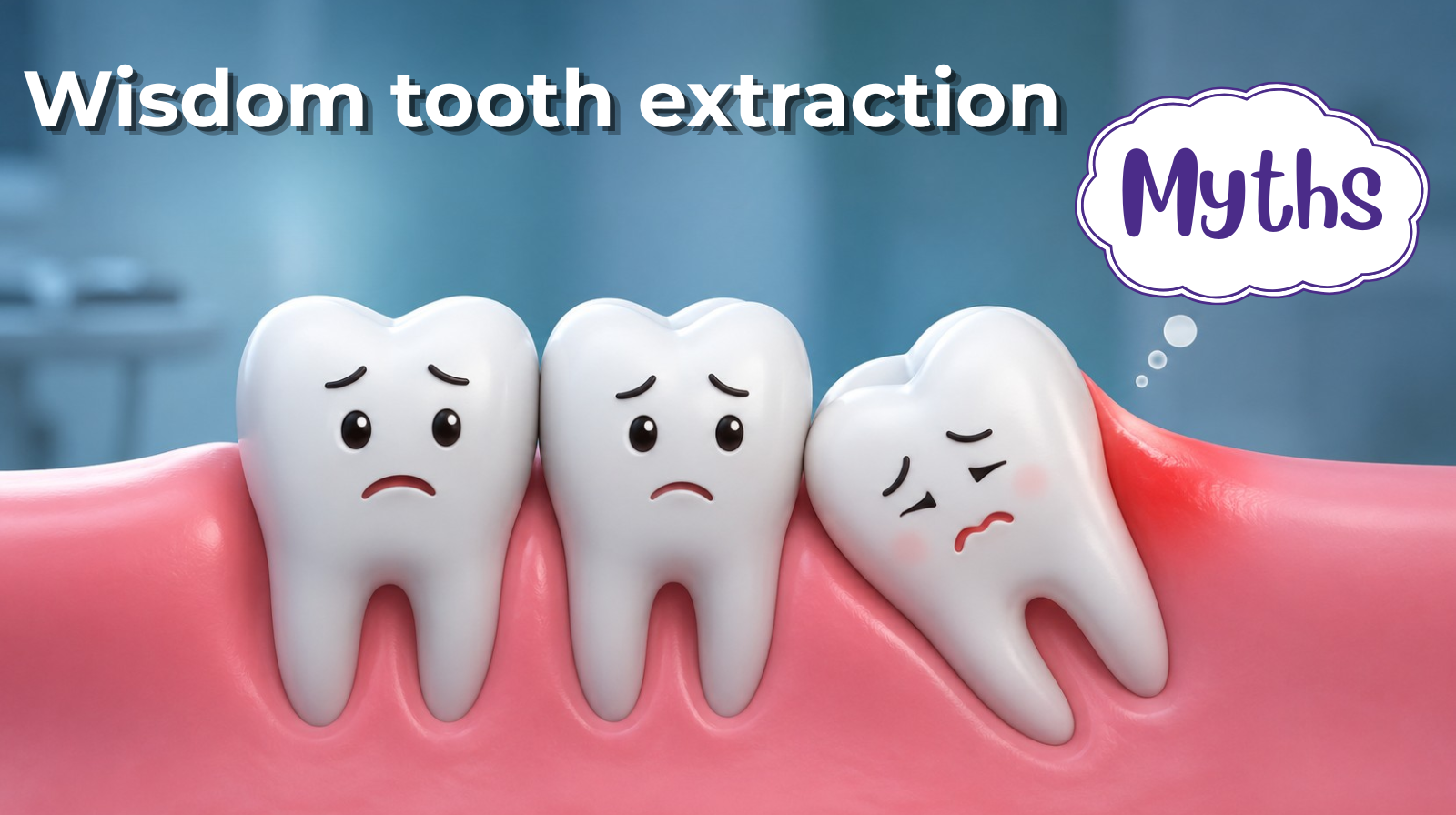
Wisdom tooth extraction is a popular & commonly performed dental procedure, yet it remains a cause of real concern for many patients. A large part of that concern comes from many myths and misconceptions that have built up around it. There’s a common myth many of us have heard, that everyone must have their wisdom teeth removed. In reality, not everyone needs treatment when their wisdom teeth emerge.
These myths can prevent people from seeking treatment they genuinely need or create unnecessary fear around a procedure that is, for most patients, straightforward and well-managed. This article explores five of the most common misconceptions about wisdom tooth extraction and the truth behind them.
What Are Wisdom Teeth?
Wisdom teeth are the last teeth to emerge, typically between the ages of 17 and 25. They get their name from the stage of life they appear at a time traditionally associated with becoming older and wiser. Since these teeth come through later than the rest of the adult teeth, they became known as wisdom teeth.
A person can develop up to four wisdom teeth, one at the back of each corner of the mouth. However, not everyone will develop all four, and in many cases wisdom teeth may never fully come through at all. Some people only become aware of their wisdom teeth after they show up on a routine dental X-ray.
Myths About Wisdom Teeth
It is surprising how much misinformation exists around wisdom teeth. Here are some of the most common myths people believe and what is actually true.
Myth 1: Wisdom Tooth Extraction Is Excruciatingly Painful
Modern dentistry offers various pain management options including local anaesthesia, general anaesthesia, and sedation, so you would feel absolutely no pain during the extraction itself. The only slightly sensitive part is the injection used for numbing, and even that lasts just a few seconds. After that, the procedure is pain-free and most patients find it a far more relaxed experience than they expected.
Some post-operative discomfort is normal once the anaesthesia wears off, but it is very manageable. Over-the-counter pain relievers can help with any pain and discomfort during recovery.
Myth 2: Everyone Eventually Needs Their Wisdom Teeth Removed
This simply is not the case. Whether a wisdom tooth needs to be removed depends entirely on the individual. Some people are born without wisdom teeth altogether, and up to 35% of the population never develops third molars at all. Some individuals may also have sufficient space in their jaw for the wisdom teeth to erupt properly without causing any issues.
Wisdom teeth only need to be removed when they become crowded or painful, or when they pose a risk to overall oral health. If your wisdom teeth are healthy, properly aligned, and fully erupted, simply have them monitored at regular check-ups. A dentist or oral surgeon can help you determine the best course of action based on your individual situation.
Myth 3: Wisdom Tooth Extraction Causes Facial Deformities
Many people believe that wisdom tooth extraction may impact the structure of the jawbone, largely due to what they observe immediately after the procedure. The post-surgery swelling can make the face look puffier than usual, giving the impression that something has permanently changed. The puffiness and swelling typically subside within two to three days.
In reality, removing wisdom teeth does not change your face shape. The size and structure of your jawbone determine your facial appearance, not your wisdom teeth. They are located at the very back of your mouth, well away from your visible teeth and gums, so their removal has no impact on your overall appearance. If you are concerned about how you might look after the procedure, rest assured you will look exactly the same as before.
Myth 4: Recovery Is Difficult & Takes Weeks
Most people recover and resume their everyday activities within a few days after the extraction. It is not a prolonged or debilitating experience, and this perception is what causes many people to delay the procedure, often allowing an underlying problem to worsen in the process.
Here is what the actual recovery timeline looks like:
Day 1: A blood clot forms at the extraction site.
Day 2: Some swelling and soreness is normal. Rest and eat cold, soft foods.
Day 3–4: Swelling and discomfort begin to ease. You will start to feel more comfortable.
Day 5–7: Pain and swelling reduce significantly. Most patients feel back to their normal self.
Week 2: Most people are back to eating normally and resuming daily activities.
Myth 5: Wisdom Tooth Removal Is Dangerous
Many patients believe that wisdom tooth extraction is a dangerous or highly complicated procedure, when in fact it is a routine treatment carried out safely every day.
In reality, wisdom tooth extraction is one of the most commonly performed dental procedures in the world. Dentists and oral surgeons carry this out as a routine procedure, often multiple times a week. They take every precaution to ensure the process is safe and comfortable. In the majority of cases, complications are rare when patients follow the aftercare advice provided by their dentist.
Conclusion
Understanding the facts about wisdom tooth removal can help ease any concerns and ensure you make informed decisions about your oral health. Many people put off treatment simply because of misinformation, and we hope this article has helped set the record straight.
At Warwick Lodge Dental & Implant Centre, we are always happy to answer your questions and guide you through your options when it comes to wisdom teeth. Whether you want a wisdom tooth removed or simply want to know more.
Book your consultation today and let us take care of the rest.