
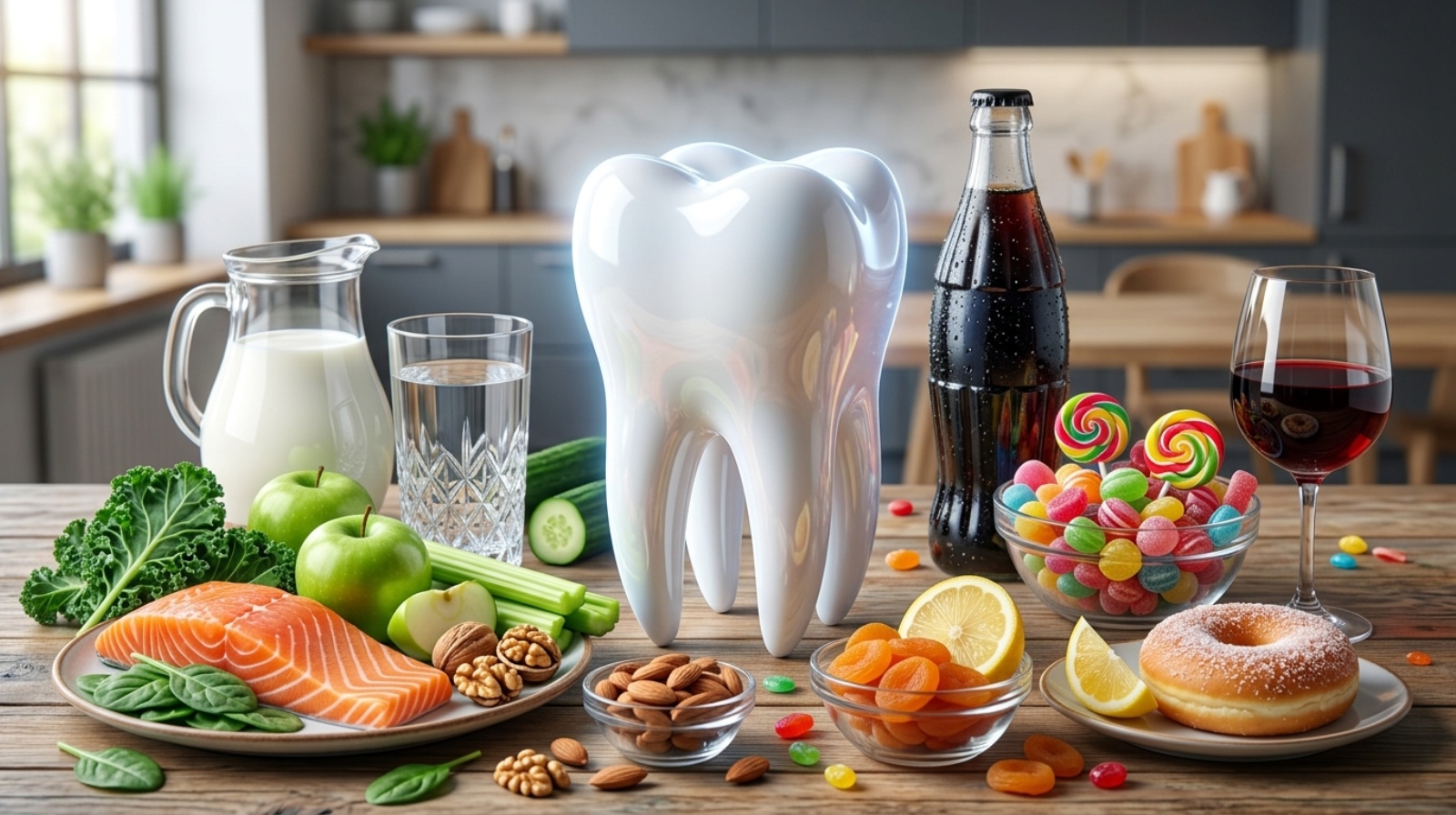
Did you know that what’s on your plate plays just as big a role in the health of your teeth as your oral hygiene routine? At Warwick Lodge Dental and Implant Centre, we often meet patients who are surprised to learn that their diet could be quietly eroding their enamel, even if their brushing technique is perfect.
In this guide, we’ll explain exactly how the foods and drinks you consume affect your teeth, which culprits to watch out for, and which everyday foods can actually help protect and strengthen your smile.
What Is Tooth Enamel, and Why Does It Matter?
Enamel is the hard, glossy outer layer that covers each tooth. It’s the hardest substance in the human body, even tougher than bone, and it’s there to protect the more sensitive layers underneath (the dentine and the nerve-rich pulp) from heat, cold, pressure, and decay-causing bacteria.
The catch is that enamel cannot repair itself the way skin or bone can. Once it’s worn away or eroded, it’s gone for good. That’s why prevention through diet, alongside good oral hygiene, is so important.
How Does Diet Actually Damage Teeth?
There are two main ways that what you eat and drink can harm your enamel:
1. Sugar feeds the bacteria in your mouth.
Plaque bacteria feast on sugars and starches left on your teeth, producing acid as a by-product. This acid attacks enamel in a process called demineralisation, gradually weakening it and creating the conditions for cavities.
2. Acidic foods and drinks attack enamel directly
Even if a food contains no sugar at all, if it’s acidic, it can soften and erode enamel on contact. This is known as dental erosion, and it’s becoming increasingly common, partly due to the popularity of fizzy drinks, sports drinks, and acidic health trends like lemon water or vinegar tonics.
Both processes can happen at the same time, which is why some of the worst offenders for your teeth are foods and drinks that are both sugary and acidic.
Foods and Drinks That Can Damage Your Enamel
Sugary sweets and dried fruit
Boiled sweets, toffees, and chewy sweets are particularly harmful because they coat the teeth in sugar for long periods, often sticking in the grooves and between teeth and giving bacteria extended access to fuel for acid production. Dried fruit, such as raisins and dried apricots, poses a similar risk: it’s concentrated in natural sugars and tends to cling to tooth surfaces, prolonging acid attacks long after you’ve finished eating.
Fizzy drinks, sports drinks, coffee and tea
Cola, lemonade, and other fizzy drinks tend to be highly acidic due to phosphoric and citric acid, and sports drinks marketed as healthy options are often just as erosive, especially when sipped slowly over time rather than drunk quickly. Coffee and tea are milder offenders, but frequent consumption without rinsing is mildly acidic and a leading cause of surface staining, gradually dulling the appearance of your smile.
Citrus fruits, juices and wine
Oranges, lemons, limes, and grapefruits are nutritious, but their high acid content means frequent exposure, especially sucking on citrus slices or drinking juice throughout the day, can soften enamel over time. Wine carries a similar risk: both red and white varieties are acidic, and red wine’s dark pigments can stain enamel that’s already been softened, making discolouration more stubborn.
Starchy snacks and hard foods
Crisps, crackers, and other starchy snacks break down into simple sugars in the mouth and often get trapped between teeth, where they continue feeding bacteria well after the snack is gone. Chewing ice, hard sweets, or biting down on hard objects doesn’t erode enamel chemically, but it can cause physical cracks and chips, particularly in teeth already weakened by acid exposure.
Foods That Protect and Strengthen Your Teeth
The good news is that plenty of everyday foods actively support strong enamel and a healthy mouth.
Dairy, lean protein and oily fish
Milk, cheese, plain yoghurt, eggs, and fish such as salmon and mackerel supply the calcium, phosphate, phosphorus, and vitamin D that are the building blocks of strong enamel. Cheese, in particular, raises saliva production and helps neutralise acid after eating, making it a smart choice to finish a meal with.
Crunchy fruits, vegetables, nuts and seeds
Apples, carrots, celery, cucumber, almonds, walnuts, and sesame seeds all share a fibrous, crunchy texture that helps mechanically clean the tooth surface while you chew and stimulates saliva flow, which washes away food particles and buffers acid. Nuts and seeds also provide calcium and phosphorus without contributing to decay.
Leafy greens and whole grains
Spinach, kale, and other leafy greens are packed with calcium and folic acid, supporting strong teeth and healthy gums, while wholemeal bread, brown rice, and oats are less likely to break down into the kind of simple sugars that fuel decay-causing bacteria, compared to their refined counterparts.
Water and unsweetened tea
Plain water is the best drink for your teeth: it rinses away food debris and acid, keeps saliva flowing, and in most parts of the UK, tap water contains fluoride, which helps remineralise and strengthen enamel. Unsweetened green and black tea contains polyphenols that can help suppress the bacteria responsible for plaque and bad breath, offering some protective benefit when consumed without sugar.
Practical Tips for Protecting Your Teeth Through Diet
A few simple habits can make a big difference, even if you’re not ready to overhaul your entire diet:
Try to keep sugary and acidic foods to mealtimes rather than grazing on them throughout the day, since each exposure restarts the acid attack on your enamel. After eating or drinking something acidic, rinse your mouth with plain water rather than reaching for your toothbrush straight away; enamel is temporarily softened after an acid attack, and brushing immediately can actually cause more wear. Waiting around 30 to 60 minutes gives your saliva time to neutralise the acid naturally. If you do drink fizzy drinks, juice, or squash, using a straw can help reduce contact with your front teeth. Finishing a meal with a piece of cheese or a glass of milk helps neutralise acid and deliver calcium when your teeth need it most.
The Role of Saliva
Saliva is your mouth’s natural defence system. It washes away food particles, neutralises harmful acids, and supplies minerals like calcium and phosphate that help remineralise weakened enamel. Staying hydrated, eating saliva-stimulating foods like crunchy fruits and vegetables, and limiting things that cause dry mouth (such as excessive caffeine or alcohol) all support this natural protective process.
When to See Your Dentist
Diet alone can’t undo damage that’s already been done, so watch for warning signs like sensitivity to hot, cold, or sweet foods, a yellowish tinge as enamel thins, or teeth that look smoother or slightly translucent at the edges.
Regular check-ups allow your dentist to spot early signs of erosion or decay before they become bigger problems, and to give you tailored advice based on your own diet and lifestyle. If you’re already noticing sensitivity, discolouration, or wear, we offer a full range of treatments to restore and protect your smile.
Final Thoughts
Your diet and your dental health are more connected than most people realise, and knowing which foods to limit and which to embrace makes a real difference over time. If you’d like personalised advice or it’s time for your next check-up, we would be happy to help. Get in touch today with Warwick Lodge Dental and Implant Centre to book an appointment.