
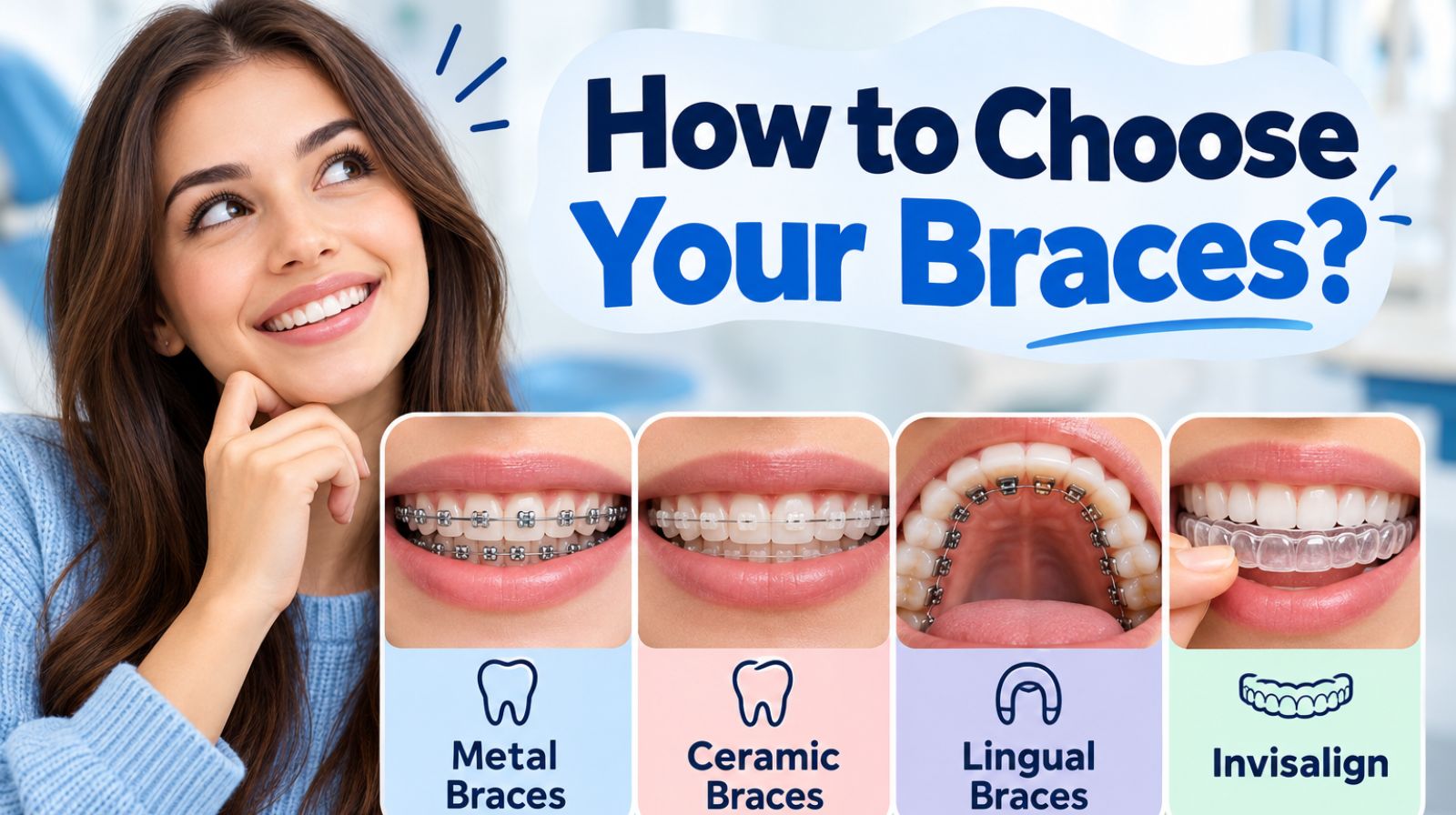
Deciding to straighten your teeth is exciting, but the next question can feel overwhelming: which braces should you choose? At Warwick Lodge Dental, we help patients of all ages make this decision every week. This guide compares the four main types of braces honestly so you can choose your braces with confidence.
Why Choosing the Right Braces Matters
Braces aren’t just about looks. Crooked or crowded teeth are harder to clean, which can increase the risk of decay and gum disease, and a misaligned bite can cause uneven wear or jaw discomfort. The right brace depends on your teeth, your lifestyle and your budget. There’s no one-size-fits-all answer.
Quick Comparison: Which Braces Are Right for You?
| Brace Type | Visibility | Typical Treatment Time | Best For | Removable? |
| Metal Braces | Most visible | 12–24 months | Complex cases, children and teens | No |
| Ceramic Braces | Low visibility | 12–24 months | Adults wanting a discreet fixed option | No |
| Lingual Braces | Hidden behind teeth | 18–24 months | Professionals wanting totally hidden braces | No |
| Invisalign | Almost invisible | 6–18 months | Mild to moderate cases, disciplined adults and teens | Yes |
Treatment times are general estimates. Your dentist will give you a personal timeline after assessment.
1. Metal Braces: The Reliable Classic
Stainless steel brackets are bonded to the front of each tooth and connected by a wire that is adjusted over time. Modern metal braces are smaller and more comfortable than many people remember.
Advantages: Highly effective for complex cases, usually the most affordable option, and they work 24/7 with nothing to remember.
Disadvantages: The most noticeable option, some sticky or hard foods must be avoided, and mild soreness after adjustments is common.
2. Ceramic Braces: Discreet but Powerful
Ceramic braces work just like metal braces, but the brackets are tooth-coloured or clear, so they blend in with your natural teeth.
Advantages: Much less visible than metal and just as effective for most cases.
Disadvantages: Usually more expensive than metal, brackets can be more fragile, and the elastic ties may stain from coffee, tea, red wine or smoking.
3. Lingual Braces: The Hidden Option
Lingual braces are fixed to the back of your teeth, so they can’t be seen from the front. They’re often custom-made for a precise fit.
Advantages: Completely hidden and suitable for many complex cases that aligners can’t treat.
Disadvantages: Often the most expensive option, can irritate the tongue at first, may cause a slight lisp for a few weeks, and are harder to clean.
4. Invisalign: The Clear Aligner Choice
Invisalign uses a series of custom clear aligners, changed every one to two weeks. Treatment is planned with a 3D scan, so you can often preview your result before you start.
Advantages: Almost invisible, removable for eating and brushing, comfortable, and needs fewer appointments.
Disadvantages: Must be worn 20–22 hours a day, aligners can be lost or forgotten, and it may not suit very complex cases.
How to Choose Your Braces: 3 Key Questions
- How complex is my case?
This is the most important factor, and only a clinical assessment can answer it. Some cases suit any option; others need fixed braces for the best result. - Will I wear aligners consistently?
Be honest with yourself. Invisalign only works when worn most of the day. If you might forget, fixed braces may give a more reliable result. - What fits my lifestyle?
Contact sports, playing a wind instrument or public speaking can all influence which braces will suit you best.
How Much Do Braces Cost in the UK?
Metal braces are usually the most affordable, lingual braces tend to be the most expensive, and ceramic braces and Invisalign typically sit in between. The final cost also depends on how complex your treatment is.
Can I Get Braces on the NHS?
NHS orthodontic treatment is generally available to under-18s whose teeth meet a certain level of clinical need, assessed using the Index of Orthodontic Treatment Need (IOTN), and usually uses metal braces. Adults typically pay for private treatment, although NHS treatment may occasionally be available where there’s a clear clinical need.
Looking After Your Teeth During Treatment
- Brush twice a day with fluoride toothpaste, taking extra care around brackets
- Clean between teeth daily with interdental brushes or floss
- Cut down on sugary food and fizzy drinks
- Keep up with regular dental and hygienist appointments
Frequently Asked Questions
Do braces hurt?
Most people feel mild pressure for a few days after braces are fitted or adjusted. This settles quickly and can be managed with over-the-counter pain relief if needed.
Am I too old for braces?
No. As long as your teeth and gums are healthy, braces can work at any age, and many of our patients are adults in their 30s, 40s, 50s and beyond.
Will I need a retainer after braces?
Yes. Retainers keep your teeth in their new position. Your dentist will recommend fixed, removable, or a combination of both.
Ready to Choose Your Braces? Book a Consultation in Warwick
The best braces are the ones that suit your teeth, lifestyle and goals. At Warwick Lodge Dental, our friendly team will assess your smile, explain your options honestly and help you choose your braces with complete confidence.