
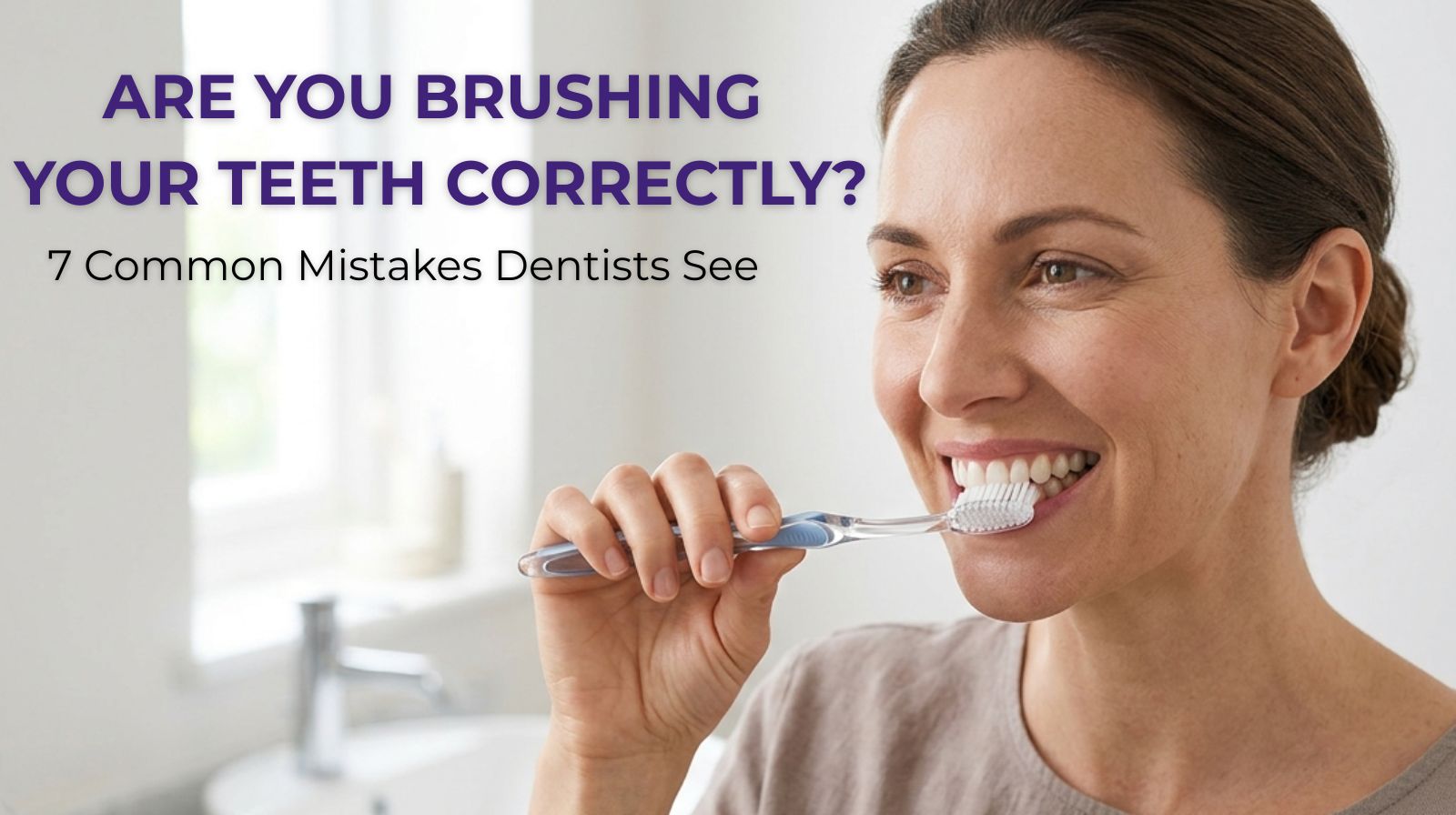
You brush your teeth every day. You use toothpaste, you have a toothbrush, and you probably feel like you know exactly what you’re doing.
But brushing your teeth every day doesn’t necessarily mean you’re brushing them effectively.
Small habits can make a surprisingly big difference to your oral health. Brushing for too little time, pressing too hard, missing the gumline or rinsing your mouth immediately afterwards can all reduce the benefits of your routine.
The good news is that most brushing mistakes are easy to correct.
The NHS recommends brushing your teeth twice a day for around two minutes, including once before bed, using fluoride toothpaste. It also recommends spitting out excess toothpaste rather than rinsing with water immediately afterwards.
So, are you making any of these common tooth-brushing mistakes?
1. You’re Not Brushing for Long Enough
Two minutes can feel surprisingly long when you’re standing at the bathroom sink.
Many people assume they have brushed for two minutes when they have actually stopped much sooner. A quick scrub may leave plaque behind, particularly around the back teeth and gumline.
The NHS recommends brushing for about two minutes, twice a day. One of those times should be the last thing at night, as this helps leave fluoride on your teeth while you sleep.
Try this:
Divide your mouth into four sections: Upper right – Upper left – Lower right – Lower left
Spend roughly 30 seconds on each section, making sure you clean the outside, inside and chewing surfaces of your teeth.
If you find it difficult to judge two minutes, an electric toothbrush with a built-in timer can be useful. However, you don’t need an electric toothbrush to brush effectively. Both electric and manual toothbrushes can work well when used correctly.
2. You’re Brushing Too Hard
It might seem logical that more pressure means cleaner teeth.
It doesn’t.
Brushing harder isn’t the same as brushing better.
Using excessive pressure can irritate the gums and contribute to enamel and gum problems, particularly if your brushing technique is aggressive. A gentle, controlled technique is more important than force.
If your toothbrush bristles are becoming flattened or splayed well before you replace the brush, you may be pressing too hard.
A better approach
Use gentle, small movements and concentrate on reaching every surface rather than scrubbing aggressively.
A small-headed toothbrush can make it easier to reach difficult areas. Current NHS guidance says medium or soft bristles are suitable for most adults, while your dentist or hygienist can recommend the most appropriate option for your individual needs.
If you regularly experience sensitivity or have noticed your gums receding, it is worth discussing your brushing technique with your dentist.
3. You’re Missing the Gumline
Your teeth aren’t the only areas that need cleaning.
Plaque can accumulate along the gumline, where the tooth meets the gum. If this area is repeatedly missed, it can contribute to inflammation and gum disease.
In fact, cleaning the gumline is an important part of effective toothbrushing. UK oral-health guidance recommends brushing the teeth and gumline carefully rather than focusing only on the visible front surfaces of the teeth.
How to improve your technique
Angle the toothbrush gently towards the gumline and use small, controlled movements.
Don’t forget the areas that are easy to overlook:
- Behind your lower front teeth
- Around the back molars
- Along the gumline
- The inside surfaces of your teeth
- The chewing surfaces of your back teeth
You don’t need to rush. A systematic routine makes it much easier to avoid missing the same areas every day.
4. You’re Choosing the Toothbrush Over the Technique
Walk into any supermarket and you’ll find dozens of toothbrushes promising better cleaning, whiter teeth and healthier gums.
So which one should you choose?
The reality is that there isn’t one toothbrush that is right for everyone.
According to the NHS, both manual and electric toothbrushes can be effective. What matters most is cleaning all surfaces of the teeth properly and using fluoride toothpaste. Some people find an electric toothbrush easier to use thoroughly, particularly if they struggle with technique or dexterity.
For most adults, a toothbrush with a relatively small head and suitable bristles is a sensible choice.
If you use an electric toothbrush, there’s no need to scrub back and forth as you might with a manual brush. Let the brush do the work and guide it slowly around each tooth.
Choose a brush that you can comfortably control and use consistently.
5. You’re Rinsing Your Mouth Straight After Brushing
This is one of the easiest mistakes to fix — and one that many people don’t realise they’re making.
After brushing, you may be tempted to rinse your mouth thoroughly with water to get rid of the toothpaste taste.
However, the NHS recommends spitting out excess toothpaste rather than rinsing immediately with water. Rinsing washes away and dilutes the fluoride left behind by your toothpaste, reducing its preventative effect.
Remember:
Brush → spit → don’t rinse.
If you use a fluoride mouthwash, it is generally better to use it at a different time from brushing rather than immediately afterwards. This helps avoid washing away the concentrated fluoride from your toothpaste.
If you’ve always rinsed after brushing, don’t worry. It’s a simple habit to change.
6. You’re Brushing Straight After Acidic Food or Drinks
Another common mistake has nothing to do with how you hold your toothbrush.
It’s when you brush.
Acidic foods and drinks can temporarily soften the surface of your teeth. These include fizzy drinks, fruit juices and other acidic foods and beverages.
Brushing immediately after consuming acidic foods or drinks can potentially contribute to tooth wear because the enamel may be more vulnerable at that point.
UK oral-health guidance recommends maintaining good dietary habits and avoiding or minimising acidic and sugary drinks, particularly those associated with tooth wear.
What should you do instead?
If you’ve just had an acidic drink or food, don’t immediately reach for your toothbrush.
Give your mouth time before brushing. In the meantime, drinking water can help clear your mouth and reduce exposure to acids.
This is particularly important if you regularly consume fizzy drinks, fruit juice, sports drinks or other acidic beverages.
7. You’re Not Cleaning Between Your Teeth
Your toothbrush can do a great job — but it cannot clean every surface between your teeth.
The spaces between teeth are difficult for toothbrush bristles to reach, which is why cleaning between your teeth should form part of your daily oral-health routine.
Depending on your teeth and gums, this could involve dental floss, interdental brushes or another method recommended by your dentist or hygienist.
Interdental cleaning helps remove plaque and debris from areas that brushing alone cannot reach.
Which should you use?
That depends on the size and shape of the spaces between your teeth.
For some people, interdental brushes are easier and more effective. For others, floss may be more appropriate.
If you’re unsure, ask your dentist or dental hygienist to show you the correct technique and recommend the right size or method for your teeth.
When Should You Replace Your Toothbrush?
Even the best brushing technique won’t work as well if your toothbrush is worn out.
As a general guide, consider replacing your toothbrush around every three months, or sooner if the bristles become worn, flattened or damaged. Kent Community Health NHS Foundation Trust recommends changing your toothbrush every three months where possible.
Key point: Are You Brushing Your Teeth Correctly?
Good oral hygiene isn’t about brushing harder or buying the most expensive toothbrush.
It’s about brushing consistently and using the right technique.
Remember the essentials:
- Brush twice a day for around two minutes
- Brush before bed and once more during the day
- Use fluoride toothpaste
- Clean all tooth surfaces and the gumline
- Use gentle pressure
- Avoid brushing immediately after acidic foods and drinks
- Spit out toothpaste rather than rinsing straight away
- Replace your toothbrush when the bristles become worn
These small changes can make your daily routine much more effective.
And if you’re unsure whether you’re brushing correctly, don’t guess. Your dentist or hygienist can look at your oral health, identify areas you may be missing and show you techniques that are appropriate for your teeth and gums.
Need help with your oral health in Herne Bay?
Warwick Lodge Dental provides preventative and general dental care in Herne Bay, Kent, including dental examinations, hygiene appointments and gum-disease care.
The practice takes a preventative approach to helping patients maintain healthy teeth and gums between dental visits.
If you have concerns about bleeding gums, persistent plaque, tartar, sensitivity or your brushing technique, speaking with a dental professional is a good place to start.