
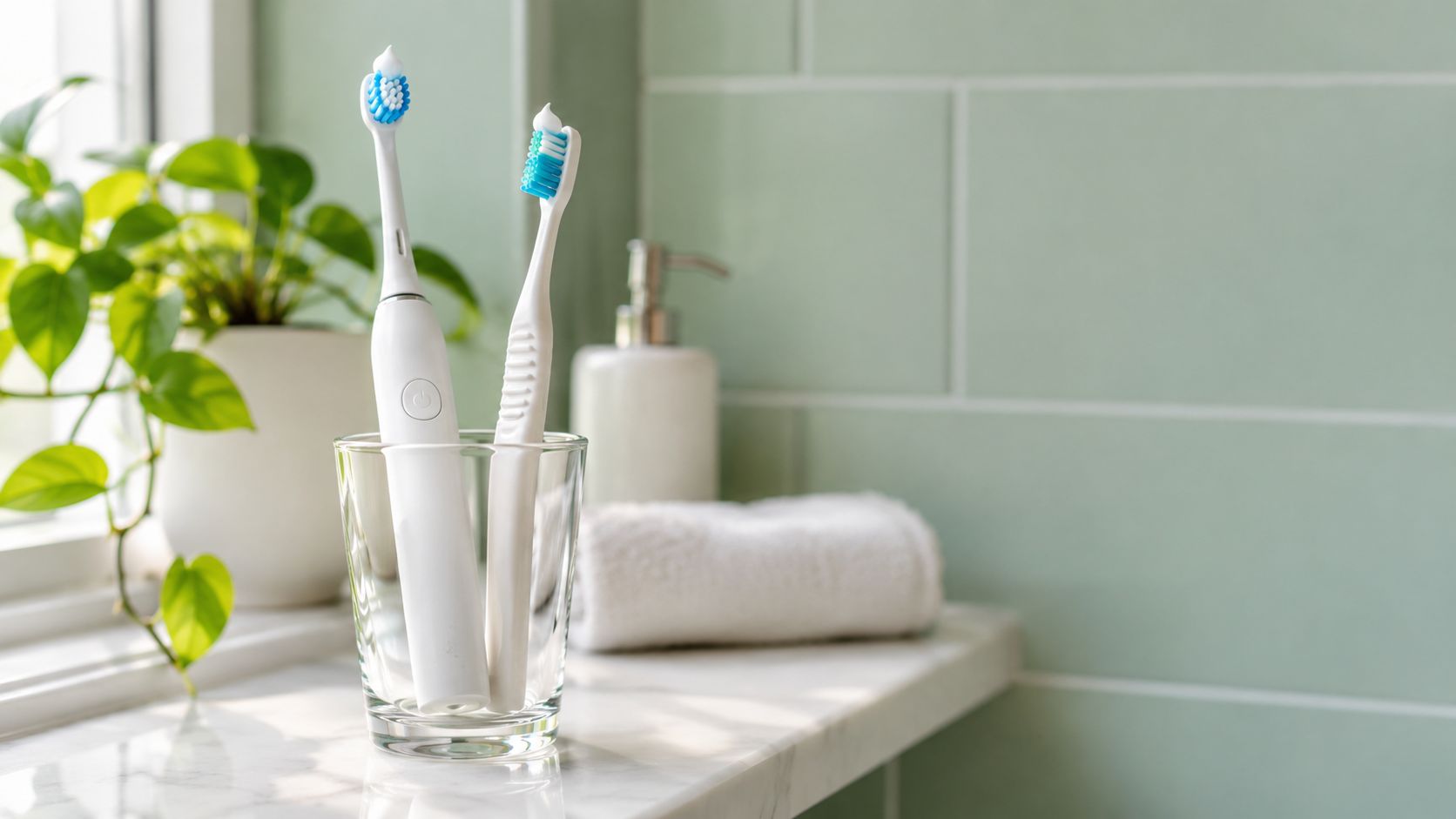
You’re standing in a chemist on Mortimer Street, staring at a wall of toothbrushes. On one side, a two-pack of manual brushes for a few pounds. On the other, a gleaming electric model with an app, a travel case and a price tag that makes you wince. Is it really worth it?
It’s a question we’re asked at almost every hygiene appointment, so here’s our honest answer.
In short: Electric toothbrushes remove a little more plaque and reduce gum inflammation more than manual brushes, according to a large Cochrane review. But a manual brush used well, for two minutes twice a day with fluoride toothpaste, still does a good job. The best toothbrush is the one you’ll use properly every day.
Is an electric toothbrush better than a manual one?
For most people, yes, by a modest margin. A Cochrane review of 56 trials and over 5,000 people found electric brushes reduced plaque by 21% and gum inflammation (gingivitis) by 11% compared with manual brushes after three months of use. The researchers noted the long-term benefits for dental health were less clear.
That review, led by Munirah Yaacob in 2014, is still the most cited summary of the evidence. Early results were smaller: an 11% reduction in plaque and a 6% reduction in gingivitis over the first one to three months.
Longer-term data is more encouraging. An 11-year German study of 2,819 adults, published in the Journal of Clinical Periodontology in 2019, found that electric toothbrush users lost 20% fewer teeth than manual brush users. That worked out at an average of 0.4 more teeth kept. As an observational study, it can’t prove the brush alone made the difference, but it fits with the trial results.
The UK’s own guidance, Delivering Better Oral Health, puts it simply: both powered and manual toothbrushes are effective for plaque control.
Why do electric toothbrushes often clean better?
Electric toothbrushes clean better mainly because they do more of the work for you. The head moves thousands of times a minute, so your technique matters less. Many also have a two-minute timer and a pressure sensor, which tackle the two most common mistakes we see: brushing too briefly and pressing too hard.
Most people brush for well under two minutes without realising it. A built-in timer that buzzes every 30 seconds nudges you round all four quarters of your mouth. A pressure sensor lights up or slows the brush when you push too hard, which protects your gums.
A 2022 network meta-analysis in the International Journal of Dental Hygiene (Thomassen and colleagues) compared single brushing sessions. Electric brushes removed more plaque than manual ones, with oscillating-rotating brushes ranked highest. If you want a refresher on technique, our guide to common brushing mistakes covers the basics.
What types of electric toothbrushes are there?
There are two main types of electric toothbrush. Oscillating-rotating brushes have a small round head that spins back and forth. Sonic brushes have an oval head that vibrates from side to side at high speed. Both work well, and research shows only small differences between them.
Manual | Oscillating-rotating | Sonic | |
|---|---|---|---|
How it moves | You do all the work | Round head turns one way, then the other | Oval head vibrates side to side |
What the research shows | Effective with good technique (Delivering Better Oral Health, 2021, updated 2025) | Ranked highest for plaque removal in one sitting (Thomassen et al., 2022) | Better than manual; slightly behind oscillating-rotating on gum bleeding (Sluijs et al., 2022) |
Typical features | None | Timer, pressure sensor, brushing modes | Timer, pressure sensor, brushing modes |
Feel | Familiar | Firm, polishing feel | Gentle buzzing, can tickle at first |
If you’re switching to a sonic brush, give it a week or two. The buzzing feeling is unusual at first, and most people soon get used to it.
When is a manual toothbrush still a good choice?
A manual toothbrush is still a good choice if you brush carefully for two full minutes, reach every surface and don’t scrub hard. It’s cheap, needs no charging and is ideal for travel. National UK guidance doesn’t insist on an electric brush, because technique matters more than the tool.
Choose a small head with medium bristles, or soft bristles if your gums are sensitive. Use small circular movements, angling the bristles towards the gumline, and work round your mouth in the same order each time so nothing gets missed. A phone timer helps you reach the full two minutes.
Cost also matters. Delivering Better Oral Health points out that many people can’t afford a powered brush. A well-used manual brush is far better than an expensive electric one that sits in a drawer.
Who benefits most from an electric toothbrush?
An electric toothbrush helps most if you find thorough brushing hard. That includes people with braces or aligners, those with arthritis or limited hand movement, children who rush, and anyone with gum disease. If your hygienist keeps finding plaque in the same places, switching can make a real difference.
Your situation | Electric or manual? |
|---|---|
Good technique, healthy gums, no problems at check-ups | Either works; choose what you’ll stick with |
Braces, fixed retainers or aligners | Electric often makes cleaning around brackets easier |
Arthritis, a weak grip or limited hand movement | Electric, ideally with a chunky handle |
Gum disease or bleeding gums | Electric is worth trying, alongside daily interdental cleaning |
Dental implants, crowns or bridges | Either, with a soft or sensitive head and careful cleaning at the gumline |
Frequent travel or a tight budget | A good manual brush |
If you have Invisalign or fixed braces, or dental implants, ask our team which brush heads suit you best.
Can an electric toothbrush damage your teeth or gums?
Used properly, an electric toothbrush is no more likely to damage your teeth or gums than a manual one. A 2011 systematic review in the Journal of Periodontology, led by Fridus van der Weijden, looked at 35 studies and found no extra risk of gum recession or tooth wear with oscillating-rotating brushes.
Problems usually come from pressing too hard, which can happen with either type. Let an electric brush glide slowly from tooth to tooth rather than scrubbing. If your gums bleed for more than a week or two after switching, or your teeth start to feel sensitive, book an appointment. Our article on sensitive teeth explains common causes.
If you have sudden pain, swelling or a damaged tooth, see our emergency dental care page.
How much do toothbrushes and hygiene visits cost?
Manual toothbrushes cost a few pounds, while electric brushes range from budget models to premium versions costing over £100, plus replacement heads. You don’t need the most expensive one. A basic model with a timer and pressure sensor gives you most of the benefit.
A brush can’t remove hardened tartar, so regular professional cleans still matter. Prices at Warwick Lodge Dental, as printed on our fees page:
- Routine hygiene appointment (30 minutes): from £85
- Hygiene with dentist: from £105
- Hygiene plus Airflow stain removal: from £135
- Direct access to a hygienist (new patients): £95
- New patient exam: from £58
For comparison, an NHS check-up in England is a Band 1 charge of £27.90 from 1 April 2026, which covers an examination and a scale and polish if clinically needed. Our hygiene appointments page explains what’s included.
How do you get the best from whichever brush you choose?
Whichever toothbrush you use, the basics matter most. Brush twice a day for about two minutes, including last thing at night, with a fluoride toothpaste of 1,350 to 1,500ppm. Spit out the excess but don’t rinse, clean between your teeth daily, and replace your brush or brush head about every three months.
A few extra tips:
- Clean between your teeth with interdental brushes or floss, as no toothbrush reaches those gaps
- Replace the head sooner if the bristles splay
- Rinse and air-dry your brush upright, away from other brushes
- Eat well for your teeth; our guide to foods that protect your enamel explains how
- Keep up regular check-ups so we can spot problems early
If dental visits make you anxious, our nervous patients page explains how we help.
Frequently asked questions
Is a sonic or rotating electric toothbrush better?
Both work well. Research suggests oscillating-rotating brushes have a slight edge for plaque and gum bleeding, but the difference is small, so choose the one you find comfortable.
Should children use an electric toothbrush?
Children can use either, as long as an adult helps or supervises. A fun electric brush with a timer can make brushing easier for children who rush.
Can I share an electric toothbrush handle?
Yes, as long as everyone has their own brush head. Rinse the handle and keep heads apart to reduce the spread of germs.
How long should I brush with an electric toothbrush?
Two minutes, the same as a manual brush. Spend about 30 seconds on each quarter of your mouth.
Does an electric toothbrush whiten teeth?
It can lift some surface stains from tea, coffee or smoking, but it won’t change your natural tooth colour. Our teeth whitening aftercare guide explains how to keep a whitened smile bright.
Do I still need to see a hygienist if I use an electric toothbrush?
Yes. No toothbrush removes hardened tartar, and a hygienist can spot early gum problems you can’t see at home.
Want personal advice on your brushing?
Our hygiene team can show you the best technique for your mouth and help you choose a brush that suits you. Visit Warwick Lodge Dental and Implant Centre at 44 Canterbury Road, Herne Bay CT6 5DF, call 01227 375 592, or contact us online. You can also meet our team before your visit.
This article is general information, not personal dental advice.